

Houston Cosmetic Dentistry Insights
The fear behind this question is real: everyone has seen a smile that announces its veneers from across the room. Here is exactly what separates natural-looking veneers from the “chiclet” look — and how to make sure yours land on the right side.
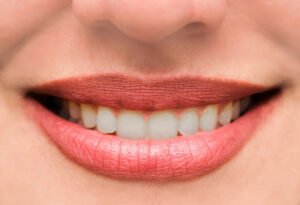
Yes — well-designed porcelain veneers can be indistinguishable from healthy natural teeth, even up close. The fake look people fear comes from five avoidable mistakes: a flat, single-shade color, opaque ceramic with no translucency, identical square shapes, oversized “too white” teeth, and bulky margins at the gumline. Choose a dentist who designs to your face and uses layered ceramics, and the only thing people will notice is that you look great.
Natural teeth are optically complicated. Enamel is semi-translucent, so light enters the tooth, scatters, and reflects back with depth — brighter at the body, subtly gray-blue at the biting edge, warmer near the gumline. Real teeth also carry tiny irregularities: faint vertical texture, soft corner rounding, minor asymmetries between neighbors.
The “fake” look happens when veneers ignore that complexity: flat white ceramic with uniform opacity reflects light like bathroom tile instead of enamel. Add ten identical rectangles in a shade brighter than the whites of your eyes, and the effect is unmistakable — and unfortunately permanent until the veneers are remade.
None of this is a limitation of porcelain. Modern ceramics can reproduce every optical property of enamel. The difference between invisible and obvious is almost never the material — it is the design decisions and the skill of the people executing them. That is why choosing the right provider matters more than choosing the right brand of ceramic; our guide to porcelain veneers in Houston explains the full process.
When we design a veneer case, five variables carry nearly all the weight:
You should never have to hope your veneers look natural — you should see it before anything is permanent. Our process builds in two checkpoints:
The digital design. Using photos and a 3D scan, we design your new smile on screen, over your own face. Tooth length, shape, and brightness are adjusted in real time to your feedback — longer, softer, warmer, brighter — until the design feels like you. Read more about digital smile design in Houston.
The trial smile. The approved design is 3D-printed and placed over your natural teeth as a wearable mock-up. You see it in your own mirror, photograph it in daylight, show your family. Only after you approve the trial does any tooth preparation begin — and the final ceramics are manufactured to match the mock-up you already loved.
This design-first sequence is the single best insurance against fake-looking results, because the “too white, too square” conversation happens on a screen and a temporary mock-up — not on bonded porcelain.
Veneer fees in Houston vary widely, and realism is a large part of what separates the tiers. A significant share of a quality veneer fee goes to laboratory artistry: a ceramist hand-layering porcelain powders, characterizing each tooth, and verifying shade against photographs of your face — work that takes hours per tooth.
Discount veneers are typically milled from a single block in a single shade, with color painted on the surface rather than built into the material. They photograph acceptably at a distance; in conversation range, the flatness shows.
Craftsmanship also decides longevity of realism: surface glaze that resists wear, edges that keep their translucency, and margins that stay sealed against stain lines at the gumline. A veneer that looks natural on day one but develops a dark margin at year three was never truly well-made. When comparing quotes, ask who the ceramist is, look at real patient photos taken up close, and check our before-and-after gallery for cases like yours.
A surprisingly common cause of unnatural results is the wrong number of veneers. Two bright veneers beside six untouched darker teeth will always announce themselves — not because the ceramic is bad, but because the blend is impossible.
We solve blending in one of two directions:
Shade selection happens in daylight-balanced lighting against your skin tone, never from a chart alone. And when a patient requests “Hollywood white,” we show the simulation honestly — then let them decide with full information. It is your smile; our job is to make sure the choice is informed.
Realism is not just delivered — it is maintained. Three habits protect it:
With that routine, porcelain veneers commonly look excellent for 10–15 years or more. When one eventually needs replacement, your original design file lets us reproduce it exactly — no starting from scratch, no mismatched newcomer in the lineup.
Not when they are designed and made well. Layered ceramics, face-matched shapes, calibrated shade, and invisible margins make quality veneers indistinguishable from healthy natural teeth in normal conversation — even to dental professionals without an exam light and mirror.
Five things: flat single-shade color, opaque ceramic with no translucency, identical square shapes, oversized ultra-white teeth, and visible or bulky gumline margins. Every one of them is a design or craftsmanship failure — and every one is avoidable with a preview-first process.
Your veneers should match the smile you want — which usually means whitening your natural teeth first, then matching ceramic to that brighter baseline. Going dramatically whiter than the whites of your eyes is the classic tell; we simulate your options so you can judge before committing.
Quality layered porcelain does, yes — including the subtle translucency at biting edges and light surface texture that natural enamel shows at close range. Budget monolithic veneers are where close-range realism typically breaks down.
At our office, always. You review a digital design over your own photos, then wear a physical trial smile before any enamel is prepared. The final veneers are built to match the mock-up you approved — no guessing, no surprises.
Expect roughly $1,000–$2,500 per tooth for laboratory-crafted, layered porcelain — the artistry that realism requires is a real part of that fee. Itemized quotes and monthly financing options are standard at our consultations.
A skilled dentist can make composite look very good, especially on one or two teeth. Across many adjacent teeth, porcelain’s layered translucency and color stability keep the edge — composite dulls and stains sooner, which erodes realism over time. See our full veneers vs. bonding comparison.
Single-tooth matching is the hardest test in cosmetic dentistry — and very much achievable. The ceramist custom-characterizes one veneer against photographs of its neighbors, matching translucency, texture, and subtle color zones. Ask to see single-tooth cases specifically when evaluating any dentist; it is where craftsmanship shows most.
Layered, hand-characterized ceramic does cost more than milled single-shade veneers — the realism is literally built in hours of laboratory artistry. Most patients find the difference worth it: a veneer you never think about again beats a cheaper one you notice in every photo.
The only honest answer to “will mine look natural?” is a preview on your own face. Book a design session at our Westcenter Drive office — you will see your projected smile on screen, then wear it as a trial before anything permanent happens.
Our Houston Smile Design dentist provides personalized cosmetic and restorative dental care at 3707 Westcenter Dr #300, Houston, TX 77042.
Learn more about the dentist’s education, credentials, and approach
Medical disclaimer: This article is general educational information from Houston Smile Design and is not a diagnosis, treatment recommendation, or guarantee of results. A clinical examination is required before any personalized dental advice, and individual needs, costs, and outcomes vary.


Worried about the fake-veneer look? Ask us anything — we reply within one business day.