
First Visit, Demystified
No drills, no commitments, no judgment — a good cosmetic consultation is a listening session with measurements. Here is exactly what happens in that first hour, what you should walk out with, and the questions that reveal whether you are in the right office.
A cosmetic dentistry consultation is a 60–75 minute, no-pressure visit with five parts: a conversation about your goals, a complete oral health exam, photos and a 3D digital scan, a discussion of treatment options ranked from most conservative to most transformative, and a written, itemized plan with real prices. Nothing is drilled, nothing is decided for you, and you should never leave feeling sold to.
The best cosmetic dentistry starts with your words, not our menu. The first fifteen minutes of a consultation at Houston Smile Design are questions aimed at you:
Patients are often surprised how specific their answers become once someone actually asks. “I hate my smile” usually resolves into two or three concrete, fixable things — a dark edge here, a gap there, a color that reads older than you feel.
This conversation matters clinically, too: a patient who wants “natural, nobody-can-tell” needs a completely different design philosophy than one who wants a dramatic transformation. Getting that on the table first is how you avoid the fake-looking results everyone fears.
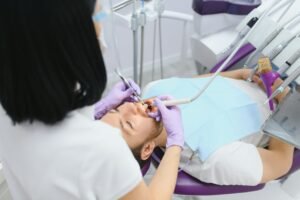
Every credible cosmetic plan sits on a health foundation, so the next twenty minutes are a complete evaluation:
X-rays are taken only if treatment planning genuinely needs them. And if we find health work that must precede cosmetics, you will hear it plainly, with the cosmetic plan sequenced after — that order protects both your health and your investment. It is also a quiet test of any office you visit: a consultation that skips the exam and jumps straight to selling veneers is telling you something important.
Next come the records that turn opinions into measurements: a series of facial and close-up photographs, a short video of you speaking and smiling naturally, and a 3D digital scan of your teeth — a small camera wand, no impressions, no radiation.
For shape-and-color cases, those records feed a digital smile design preview — your possible results rendered over your own photos, adjusted live to your feedback. Veneer and makeover candidates can go a step further at a follow-up visit with a wearable trial smile.
Two honest notes about previews: first, they are built from real measurements, so they show what is achievable rather than a filtered fantasy. Second, they frequently shrink treatment plans — seeing that whitening plus two bonded teeth achieves 90% of the goal has talked many patients out of ten veneers. A preview that only ever grows the plan is a sales tool; one that sometimes shrinks it is a design tool.
The consultation ends with the part most offices fumble: options and money, in plain language.
You should see every reasonable path to your goal, ranked from most conservative to most transformative — for example: whitening alone; whitening plus bonding; Invisalign then minimal veneers; or a full veneer smile zone. Each with its honest pros, cons, longevity, and maintenance expectations.
And each with a number attached. Our plans are itemized in writing — per tooth, per procedure, including laboratory fees — with monthly financing options calculated so you can compare paths as real budget decisions, not abstractions. Insurance contributions for any health-necessary portions are verified before treatment, never guessed.
What you should never hear: pressure to decide today, a discount that expires when you leave, or a plan that starts with the most expensive option. You are allowed to take the roadmap home and think — ours are built for exactly that.
Take these to any office — including ours. The answers reveal more than any advertisement:
You leave with three things: your preview images, your written itemized roadmap, and zero obligation. What happens next is entirely yours to pace:
The only wrong move is deciding based on fear of the consultation itself. The visit is genuinely pleasant — an hour of talking about possibilities with nothing sharp involved — and patients who avoided dentists for a decade routinely tell us the hardest part was booking, not attending. Browse our before-and-after gallery to see where that first hour has taken other Houston patients.
Plan for 60–75 minutes: about fifteen for the goals conversation, twenty for the complete exam, twenty for photos and the 3D scan, and the remainder reviewing options and written pricing. Trial smiles for veneer cases are typically fitted at a short follow-up visit.
No. Nothing is drilled, numbed, or altered at a consultation. The most invasive moment is a camera wand scanning your teeth — patients regularly describe it as the easiest dental visit they have ever had.
Consultation fees vary by office; ours is a modest flat fee credited toward treatment if you proceed, and you keep your preview images and written plan either way. Beware of “free” consultations that function primarily as sales appointments.
Yourself, any insurance details, a list of medications, and — genuinely useful — photos of your smile from years past or smiles you admire. If you have recent X-rays elsewhere, we can request them so nothing is repeated unnecessarily.
At our office, always — itemized in writing, per procedure, with financing math included. Vague ranges that firm up only after you commit are a red flag anywhere. Costs only change if the clinical plan itself changes, and that conversation happens with you first.
Yes — the on-screen design preview happens live during your consultation using your photos and 3D scan. Wearable trial smiles for veneer cases follow at a second short visit once your approved design is printed.
Never. A large share of our patients arrive after years of avoiding dentists, and the consultation is deliberately judgment-free: where your smile goes from here is the only topic. You will be met with a plan, not a lecture.
No — and you should be wary of any office where it feels expected. You leave with your roadmap and decide on your own schedule: same week, next year, or somewhere in between. Designs stay on file for whenever you are ready.
If a plan feels large, vague, or rushed — yes, absolutely, and reputable offices welcome it. Bring your written estimate; a good second consultation will explain differences plainly. Plans built on measurements and previews survive comparison; plans built on pressure do not.
Of course — that describes many of our favorite patients. The exam simply establishes an honest starting point, any health work gets sequenced first, and the cosmetic conversation proceeds without a word of judgment about the gap.
One relaxed hour at our Westcenter Drive office: your goals heard, your health checked, your options previewed, and real prices in writing. Evening and Saturday appointments available — and the decision afterward is entirely yours.
Our Houston Smile Design dentist provides personalized cosmetic and restorative dental care at 3707 Westcenter Dr #300, Houston, TX 77042.
Learn more about the dentist’s education, credentials, and approach
Medical disclaimer: This article is general educational information from Houston Smile Design and is not a diagnosis, treatment recommendation, or guarantee of results. A clinical examination is required before any personalized dental advice, and individual needs, costs, and outcomes vary.


Nervous about a first visit? Ask us anything beforehand — we reply within one business day.